Creating Clarity in Product Collaboration at Sense

Topics: process * product development * ideation * documentation
Format: several months engagement
Team: ~30 member product development
The Challenge
Sense, a ClimateTech company based in Cambridge, MA, has spent the last 12 years innovating smart home energy technology that empowers consumers and utilities to better manage the grid. But in late 2024, as the company evolved its utility- and consumer-facing product lines, work within its 30-person technology development team had started to feel… messy.
Nancy Riley, newly hired SVP of Product, saw teams struggling with inconsistent processes, especially around product specifications and early-stage ideation. With her focus pulled toward vision-setting and roadmapping, she brought me in to help tackle the team’s collaboration challenges head-on.
What We Found
Sense’s teams are organized as cross-functional “pods” — each with a PM, designer, and various types of engineers. They had developed unique, siloed workflows, including for how they articulated the “product specifications,” the documentation of what the engineers were to build, its features and functionality and goals. The same kind of work was being documented differently across pods, which made it hard to track what was being built, who was involved, and how to help one another. This led to misalignment, rework, and confusion.
Team members also voiced frustration with the ideation process. Engineers wanted visibility and input on new product ideas but didn’t want every early brainstorm to distract them from their ongoing work. The lack of clarity around who should be involved — and when — left teams navigating a blurry, inconsistent path from idea to execution.
What We Did
We tackled two core challenges with focused workstreams and cross-functional teams:
1. Creating a Shared “Source of Truth”
I worked with team members from across pods to co-design a unified product spec template — one that met the needs of engineers, designers, PMs, and QA alike. During an on-site workshop, we used a card-sorting based exercise to identify which elements of the documentation were highest priority. For example, there was team consensus that the spec document must contain business context, definition of success, scope, and functionality requirements; other potential elements, such as visual designs and detailed engineering breakdown could live in other tools such as Figma drawings and Jira tickets. By role-playing different team perspectives during the exercise, participants built empathy and alignment on what really mattered across the pod, not just for their own particular function.
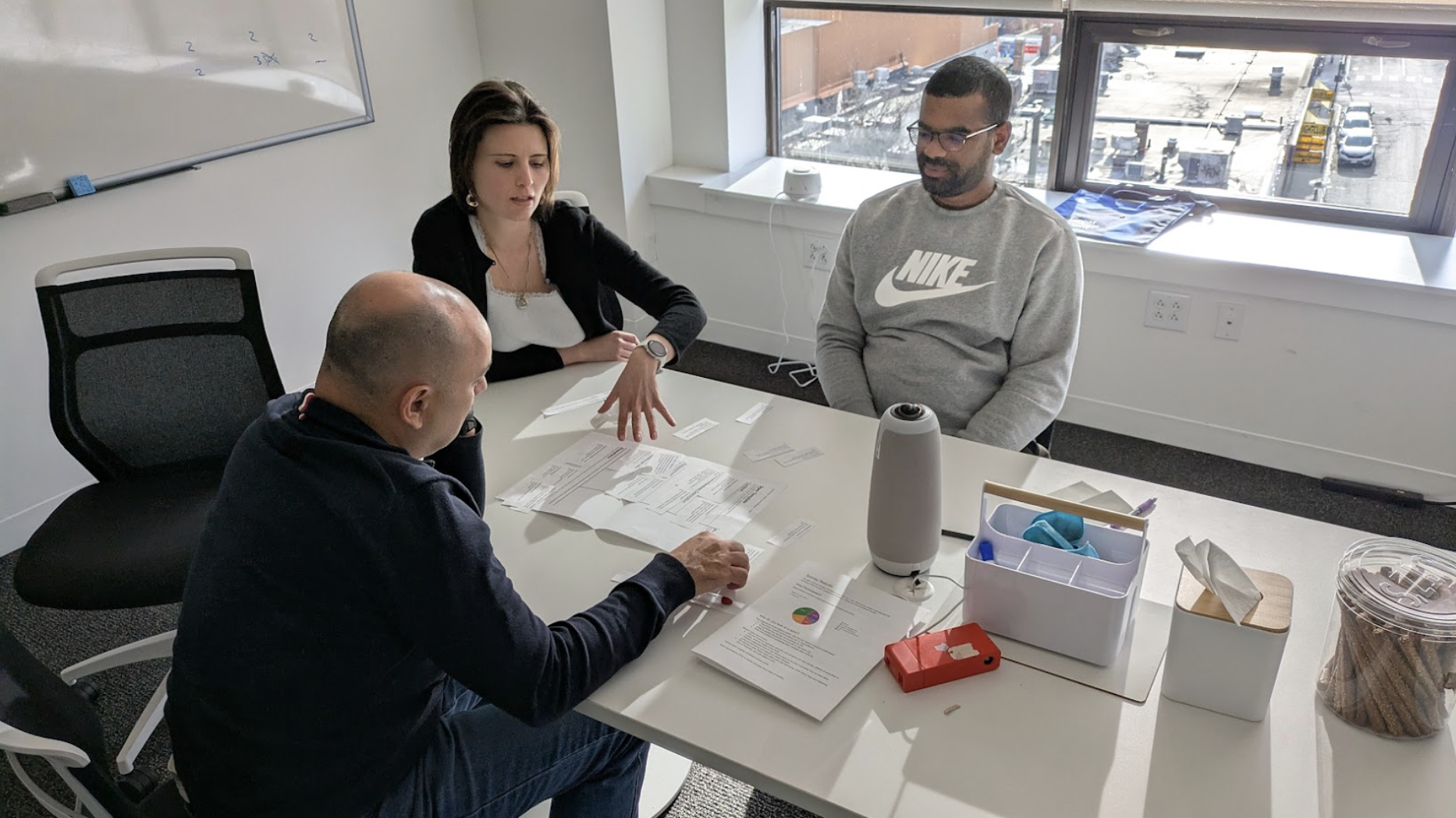
Team Members debate spec elements to include or exclude.
The result? A single, adaptable spec template that’s now being used across the team, with feedback loops in place to refine as they go. By documenting feature builds in a shared way, the teams can more easily align their workplans, get feedback, and share resources.
“It’s been really helpful to have everything in one place – the whole team working on the project knows where to go for the latest information, and we don’t have to worry about things becoming out of sync nearly as much as we did before when information was scattered across epics, individual stories, and various confluence documents.” – Becca Smith, Product Manager
2. Clarifying the Early Ideation Journey
A separate workstream mapped out the early product development process — from idea to greenlight — by breaking it into four clear phases. For each phase, we defined key questions, expected outputs, who’s involved, and how teams stay informed. This simple, phase-based guide is now a shared language across pods, making it easier to collaborate without contributing to overwhelm.
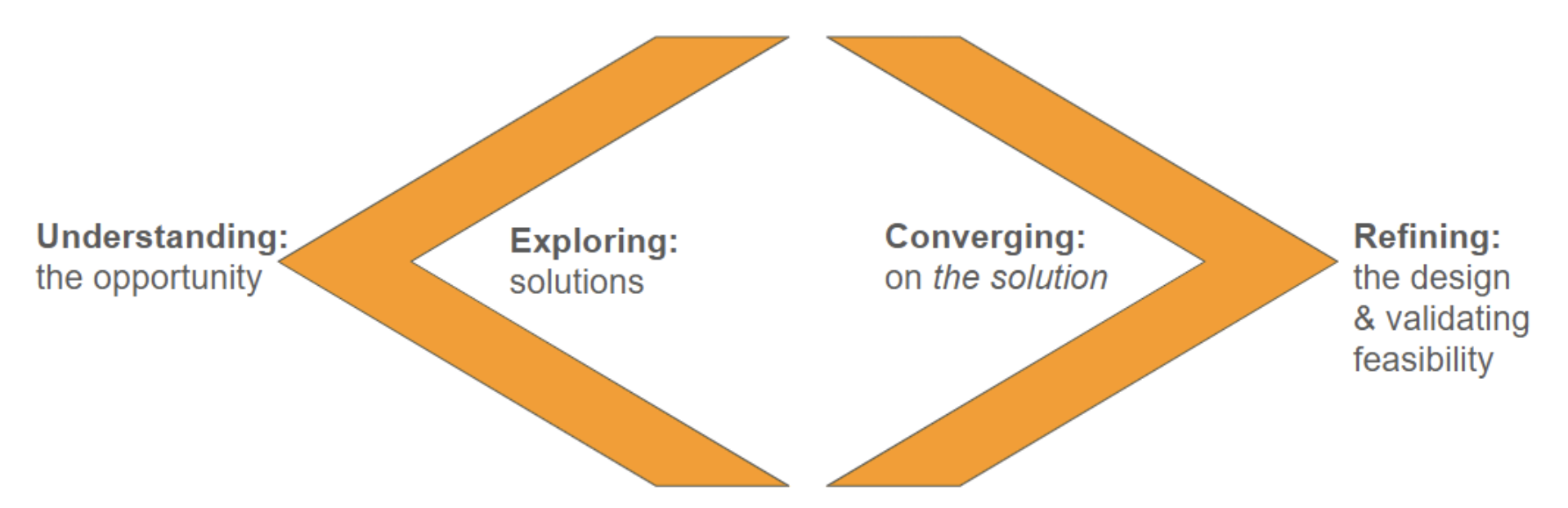
Diagram of phases of Early Ideation Journey.
What’s Next
While the company faced changes during this period — team transitions, new priorities — the new Specification template and the new Early Ideation framework are already being used in real projects. And we picked up a small exploration in scoping and work breakdown, setting the team up to more predictably size the work they were taking on.
We’ll reconvene the core teams occasionally to gather feedback, track adoption, and improve the tools based on lived experience. With a strong foundation in place, the team is ready to take on the next layer of collaboration.
If your organization is navigating similar growing pains — unclear processes, inconsistent collaboration, or siloed product practices — let’s talk. Co-designed solutions like these don’t just clean things up. They unlock your team’s ability to move faster, together.